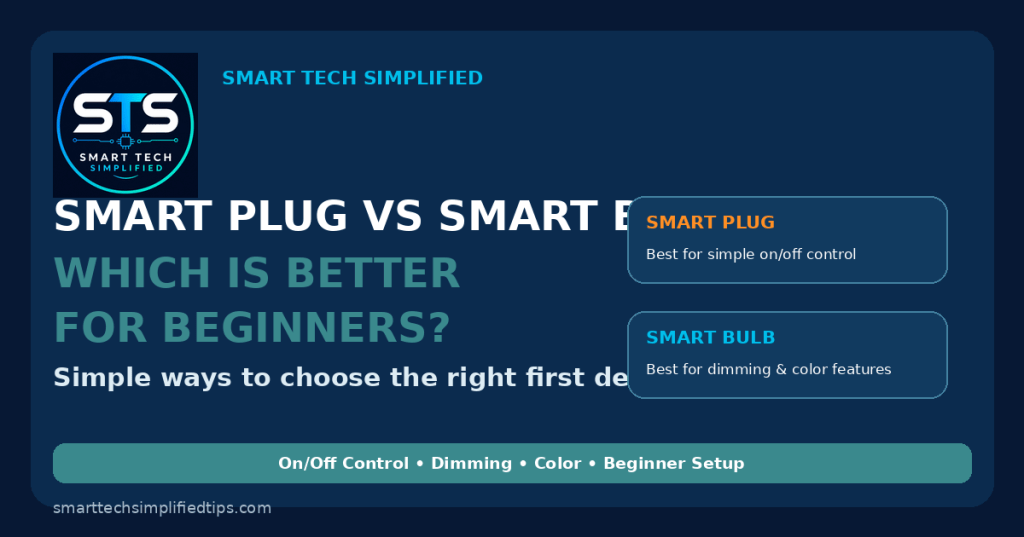
Smart plugs and smart bulbs are both easy ways to start building a smart home, but they do different jobs. A smart plug controls power to whatever is plugged into it, while a smart bulb controls the light itself and may offer features like dimming or color changes. Both can work with compatible smart-home platforms, so the better choice depends on what you want to control. Google Home, for example, supports on/off control for compatible smart plugs and brightness or color controls for compatible smart lights.
Quick Answer
Choose a smart plug if you want to control a lamp or another simple plug-in device without replacing the bulb. Choose a smart bulb if you specifically want smart lighting features such as dimming, color temperature, or color changes.
What a Smart Plug Does
A smart plug sits between the wall outlet and a plug-in device, letting you control power through an app, voice assistant, or automation. It works best with simple devices that turn on when power is supplied, such as many lamps, fans, and small appliances. Smart plugs are mainly about on/off control, though some models also support schedules, routines, energy monitoring, or dimming. Alexa currently supports on/off control for compatible plugs and switches, with additional capabilities depending on the device.
What a Smart Bulb Does
A smart bulb replaces the bulb itself and gives you direct control over the light. Depending on the model, you may be able to turn it on and off, dim it, adjust the white color temperature, or choose different colors. This makes smart bulbs a better choice when you want lighting features rather than simply cutting power to a lamp. Alexa’s current lighting support includes on/off, brightness, color, and color-temperature controls for compatible bulbs.
Which One Is Easier for Beginners?
Both are beginner-friendly, but a smart plug is usually the simplest starting point because it mainly adds on/off control to a device you already own. A smart bulb takes a little more setup, but it gives you more lighting-specific features such as dimming, color temperature, or color changes when the bulb supports them. Alexa and Google Home both support basic on/off control for compatible plugs, while compatible smart lights can also expose brightness and color controls.
Choose a Smart Plug If…
You want to control a lamp or simple plug-in device.
You mainly need on/off control.
You don’t want to replace the bulb itself.
You may want to reuse the plug with another device later.
Choose a Smart Bulb If…
You want dimming or color controls.
You want to adjust the light itself instead of just cutting power.
You’re building smart lighting routines or scenes.
You want more control over brightness or color temperature.
Bottom Line
For most beginners, a smart plug is the easiest and most flexible first smart-home device. A smart bulb is the better choice when your main goal is smarter lighting with features like dimming, color temperature, or color changes. Before buying either one, check that it works with the smart-home platform you use and supports the features you actually want.
Looking for more beginner-friendly smart home help? Explore our Smart Home guides for device ideas, setup tips, and practical advice.
 Smart Tech Simplified
Leave a comment