
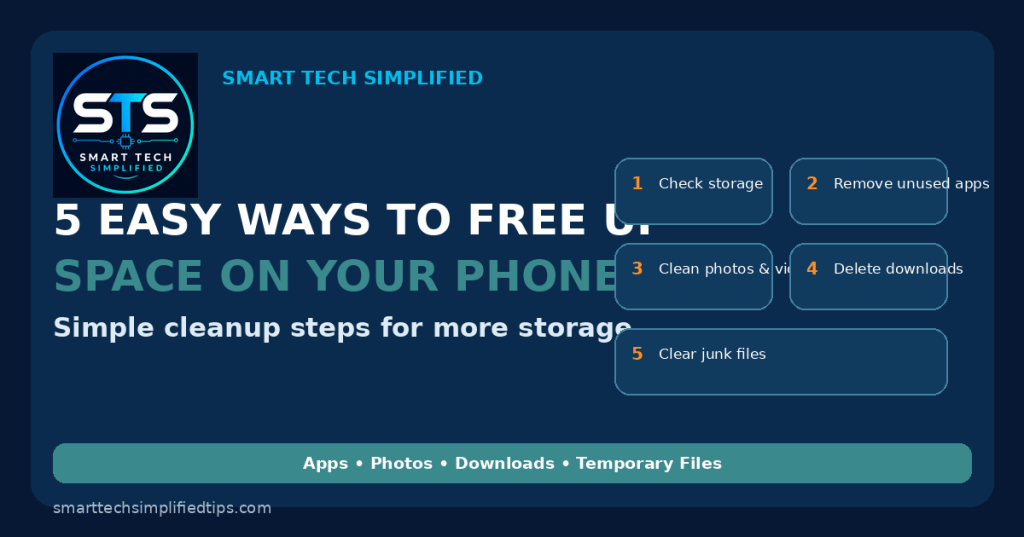
Running out of phone storage can make it harder to install apps, download updates, take photos, or save videos. Before deleting things at random, start by checking what’s using the most space, then work through these five simple cleanup steps.
1. Check What’s Using Your Storage
Start by looking at your storage breakdown so you know what’s taking up the most space. On iPhone, go to Settings → General → iPhone Storage. On many Android phones, go to Settings → Storage. This can quickly show whether apps, photos, videos, downloads, or other files are using most of your space. Apple and Google both recommend checking the storage breakdown first.
2. Remove Apps You Don’t Use
Apps can take up a surprising amount of storage, especially games, social media apps, and apps that save downloaded content. On iPhone, you can delete an app or use Offload Unused Apps, which removes the app itself while keeping its documents and data. On Android, you can uninstall apps you no longer use, and supported devices can also archive infrequently used apps while keeping personal app data.
3. Clean Up Photos and Videos
Photos and especially videos can use a large amount of storage. Before deleting anything important, make sure it’s safely backed up. If you use Google Photos, its “Free up space on this device” feature can remove local copies of photos and videos that are already backed up. On iPhone, review large or unwanted photos and videos and remove only the ones you no longer need.
4. Delete Downloads and Offline Media
Downloaded movies, music, podcasts, documents, and other offline files can quietly use a lot of space. On Android, review downloaded media inside the app that created it or use Files by Google to remove downloads you no longer need. On iPhone, check downloaded videos, music, podcasts, and files, and remove only the local downloads you no longer want. Google and Apple both recommend reviewing downloaded media and files when storage is tight.
5. Clear Temporary or Junk Files
On Android, clearing temporary files can help free space without deleting your personal content. Files by Google includes a Clean section for junk files, and many Android phones also let you clear an individual app’s cache in Settings. Be careful with options labeled Clear storage or Clear data, because those can erase an app’s saved information.
Bottom Line
The safest way to free up phone storage is to start with the biggest space users: unused apps, photos and videos, downloaded media, and temporary files. Check what’s taking up space first, back up anything important, and avoid deleting files you don’t recognize. A few minutes of cleanup can often free enough room for updates, new apps, and more photos.
Looking for more simple tech help? Explore our Tech Tips guides for beginner-friendly fixes, storage advice, and everyday technology help.
 Smart Tech Simplified
Leave a comment